

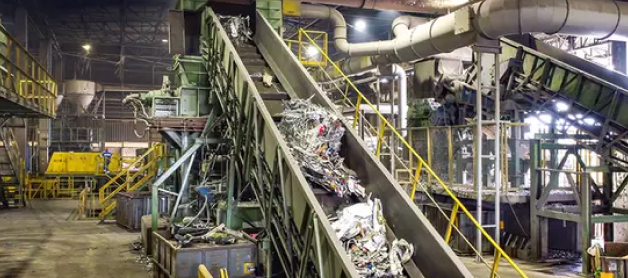




Our process starts with disciplined raw material sourcing. We use carefully selected aluminium scrap and ingots that meet defined composition standards, ensuring performance consistency from first stage.
Carefully selected aluminium ingots & scrap
Defined alloy composition standards
Batch-wise material
traceability
Consistent input for predictable output
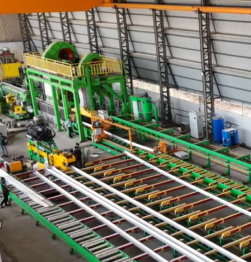
Equipped with 1000, 1600, 1800, and 3000-ton presses. Supports a wide range of extrusion sizes and complexities.
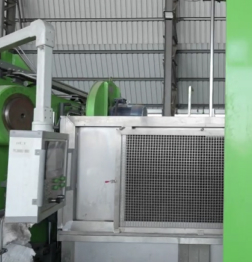
Ensures controlled, uniform cooling after extrusion with advance technology of air, water & fog.
Regulates die temperature during continuous extrusion cycles. Improves process stability and extends die life.
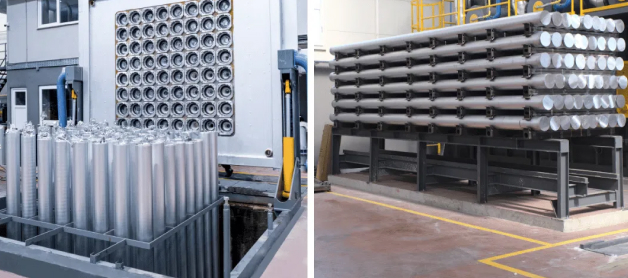
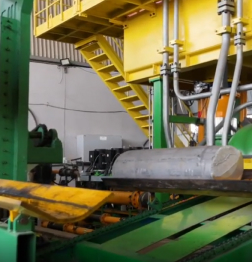
Automated billet heaters maintain precise temperature control. Ensures stable metal flow and consistent quality.
Maintains alignment and controlled pulling during extrusion. Improves profile straightness.
At SNJ, every Alminium profile goes through a controlled, documented, and quality-assured production cycle designed to deliver strength, consistency, and performance.
We source high-grade aluminum scrap and certified ingots from trusted suppliers to balance sustainability with material integrity. Only verified inputs move forward.
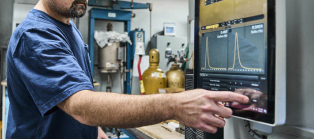
All raw material undergoes strict chemical, structural, and contamination checks to ensure purity, alloy consistency, and suitability for extrusion.
Approved material is melted in controlled furnaces. Impurities are removed, alloy composition is stabilized, and the molten metal is cast into high-strength billets.
Billets are heat-treated to stabilize internal structure and grain flow. This improves strength, machinability, and extrusion performance.
Custom extrusion dies are preheated to ensure smooth metal flow, reduce tooling stress, and achieve precise dimensional tolerance during extrusion.
Billets are heated to extrusion temperature for optimal deformation behavior, enabling smooth, consistent shaping.
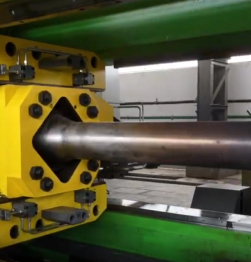
The billet is pressed through the heated die using high-tonnage extrusion presses (1000–3000 tons), forming exact profile geometry based on application requirements.
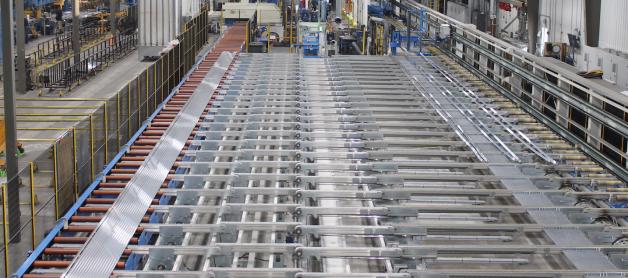
Freshly extruded profiles are cooled using controlled air, water or fog quenching to lock in structural properties and dimensional stability.
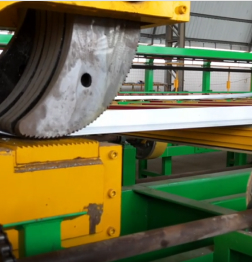
Profiles are cut to custom or standard lengths with high-accuracy cutting systems, ensuring consistency batch after batch.
Profiles are mechanically stretched to eliminate residual stresses, correct twists, and achieve exact straightness.
Profiles are cut to custom or standard lengths with high-accuracy cutting systems, ensuring consistency batch after batch.
Controlled aging enhances alloy strength and hardness. Performance is optimized for load-bearing applications.
Profiles are packed securely to avoid transit damage and shipped with precision-tracked dispatch systems, ensuring timely delivery across industries.
Quality at SNJ is verified through multiple inspection stages, not just at the end. Each profile passes through 3 to 4 quality checkpoints across the production cycle, covering dimensional accuracy, surface finish, mechanical properties, and alloy composition.

Used to verify alloy composition and chemical consistency, ensuring every batch meets defined material standards.

Enables flatness verification and precision measurement for dimensional accuracy across critical profile surfaces.
BHL (Brinell Hardness Testing), UTS (Ultimate Tensile Strength Testing), Rockwell Hardness Testing to validate mechanical strength.
Correction machines ensure exact dimensions and straightness, maintaining tight tolerances on every profile.

See how our quality standards support critical applications across multiple sectors.